2026年3月6日星期五

Ultimate Guide to Choosing Duct Tape for Air Conditioning

 Choosing the right duct tape for air conditioning is essential for sealing, repairing, and maintaining HVAC systems. Despite its name, traditional cloth duct tape is not suitable for AC ductwork. Using the wrong tape can cause air leaks, insulation damage, and long-term energy loss.

This guide explains the best ac duct tape options, compares materials, and shows you how to select the right hvac tape for ducts for durable, efficient performance.
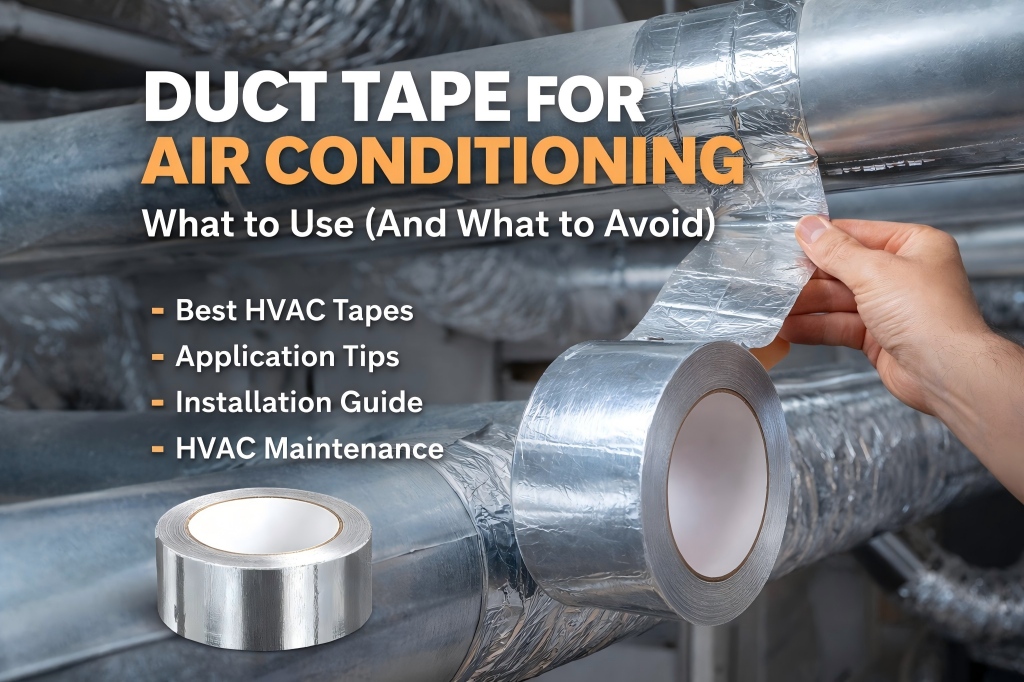
Duct Tape for Air Conditioning

Why Standard Duct Tape Fails on AC Systems

Many homeowners mistakenly use general-purpose cloth duct tape for HVAC repairs. However, traditional rubber-based duct tape:

  • Dries out and cracks under temperature fluctuations
  • Fails in humid or condensation-prone environments
  • Loses adhesion under constant airflow pressure
  • Leaves residue and shrinks over time

For sealing ac ductwork tape joints and vents, professionals rely on specialized aluminum foil HVAC tapes engineered for heat resistance and vapor sealing.

Best Types of Duct Tape for Air Conditioning

1. Aluminum Foil Tape (Recommended Solution)

Also known as ac foil tape, air conditioning foil tape, or aluminum tape for ac, this is the industry-standard solution for HVAC duct sealing.

Why It Works

  • Wide temperature resistance (typically -30°C to 150°C or higher)
  • Excellent vapor barrier performance
  • Moisture and humidity resistant
  • Long-term adhesion stability
  • Heat reflective for improved efficiency

Best Applications:

  • Sealing metal duct joints
  • Repairing small leaks or punctures
  • Securing insulation wraps
  • Connecting duct sections

If you're searching for foil tape for hvac ductwork or foil tape for air conditioner repairs, aluminum foil tape is the correct choice.

2. HVAC Mastic Tape

Mastic-based sealing tapes form a thicker, semi-permanent seal.

Pros:

  • Superior airtight sealing
  • Long-lasting durability

Cons:

  • Messier application
  • Longer curing time

Best suited for commercial HVAC systems requiring permanent sealing.

3. High-Performance Acrylic HVAC Tape

Premium ac duct repair tape options use advanced acrylic adhesives for improved aging and UV resistance.

Ideal For:

  • Indoor HVAC sealing
  • Long-term duct performance
  • Insulated duct systems

How to Choose the Right HVAC Tape for Ducts

When selecting duct tape for ac ducts, evaluate these factors:

1. Temperature Rating

Ensure it withstands heating and cooling cycles.

2. Moisture Resistance

Air conditioning creates condensation—choose a vapor-resistant tape.

3. Adhesive Type

Acrylic adhesives outperform rubber adhesives in longevity and UV resistance.

4. UL Certification

Look for UL 181-rated hvac tape for ducts to meet building code requirements.

5. Thickness & Durability

Professional-grade air conditioner vent tape should offer strong puncture resistance and stable adhesion over time.

Aluminum Tape vs Cloth Duct Tape

FeatureAluminum Foil TapeCloth Duct Tape
Heat ResistanceExcellentLimited
Moisture ResistanceHighModerate
Long-Term StabilityExcellentPoor
HVAC RecommendedYesNo
Vapor BarrierYesNo

For any duct tape air conditioner application, aluminum foil tape clearly provides superior performance.
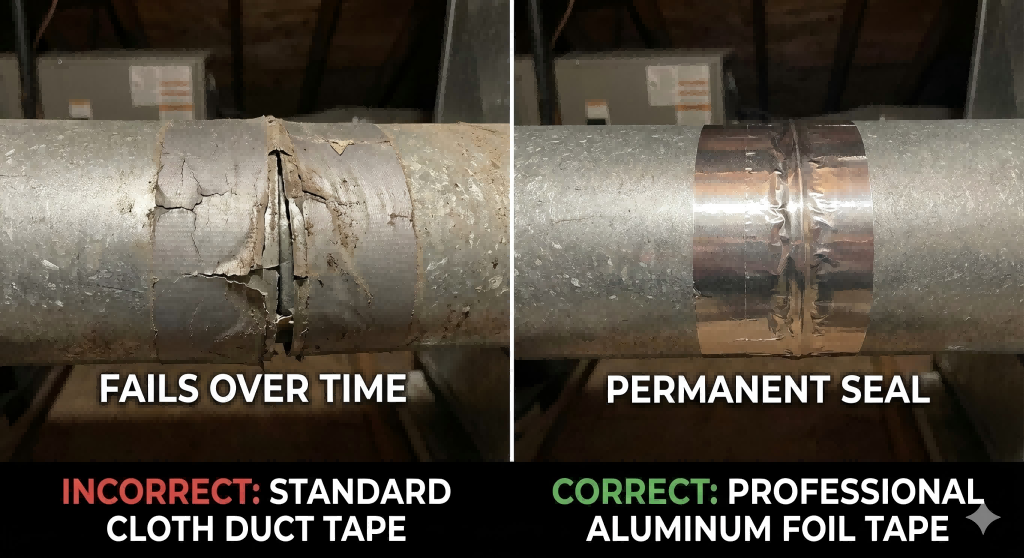
Aluminum Tape vs Cloth Duct Tape

Step-by-Step: Using AC Vent Tape Correctly

To ensure optimal sealing with ac vent tape or air conditioner vent tape, follow these steps:

  • Clean the Surface: Remove dust, oil, and moisture.
  • Measure & Cut: Cut tape slightly longer than the seam.
  • Apply Even Pressure: Smooth firmly with a squeegee or roller.
  • Seal Edges Properly: Press edges flat to prevent lifting.

Proper installation ensures maximum efficiency and long-term reliability.

When Should You Replace AC Duct Tape?

Replace your ac duct repair tape if you notice:

  • Visible air leaks
  • Peeling edges
  • Brittle or cracked adhesive
  • Increased energy bills
  • Uneven cooling

High-quality foil tape for air conditioner systems minimizes maintenance and improves HVAC performance.

Conclusion

Using the correct duct tape for air conditioning is critical for preventing energy loss, maintaining airflow efficiency, and extending HVAC system lifespan. Standard cloth duct tape is not suitable for AC systems. Instead, professional-grade ac foil tape, aluminum tape for ac, or certified hvac tape for ducts ensures long-term durability and performance.

Looking for reliable, high-performance HVAC sealing solutions?

SLAA offers professional-grade aluminum foil tapes and HVAC duct sealing products engineered for durability, heat resistance, and long-term efficiency.

👉 Contact SLAA today to get expert support and find the right tape for your air conditioning system.

How to Prevent Paint Bleed: 5 Pro Secrets for Razor-Sharp Lines

 When painting walls, trim, or furniture, nothing is more frustrating than peeling off tape and seeing messy edges. Paint bleed is a common problem, but the solution is simpler than most people think. Learning how to use painter's tape properly can make the difference between a professional-looking finish and uneven paint lines.

In this guide, you’ll discover five professional techniques that help prevent paint bleeding under tape and produce sharp paint lines every time.

Why Paint Bleeds Under Tape

Before mastering how to properly use painters tape, it’s important to understand why bleeding happens.

Paint usually seeps under tape because of:

  • Dust or dirt on the surface
  • Uneven or textured walls
  • Poor tape adhesion
  • Applying thick paint layers
  • Incorrect tape removal
  • Removing tape at the wrong time
  • Using low-quality masking materials

Using the correct method for how to apply painters tape ensures that the tape forms a tight seal against the surface.

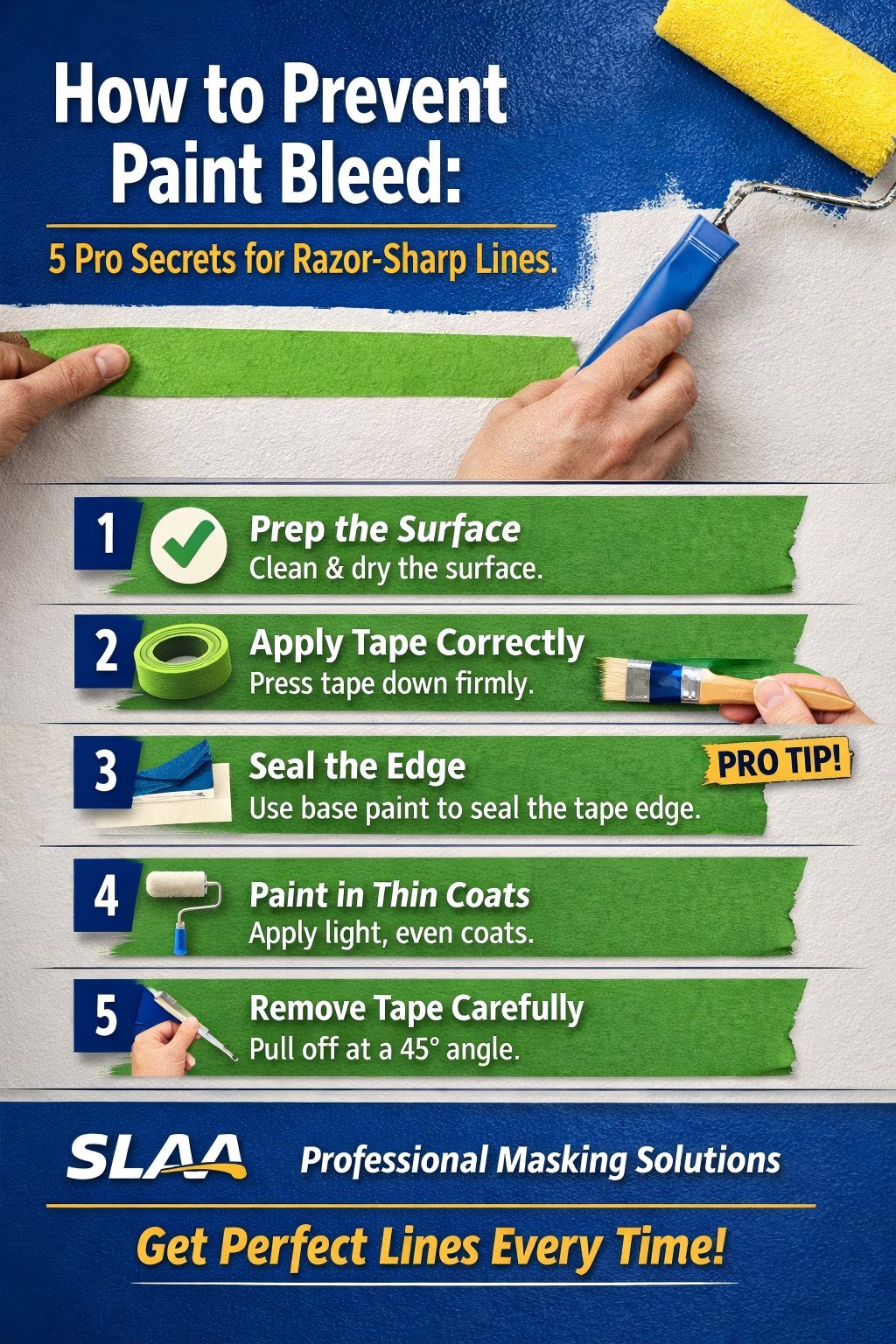
How to use painters tape

5 Pro Secrets for Sharp Paint Lines

1. Start With Proper Surface Preparation

The most common reason for paint bleed isn't the tape itself—it's what’s underneath it. Tape cannot create an airtight seal on a dirty or textured surface.

  • Clean the surface: Wipe surfaces with a damp cloth to remove dust.
  • Degrease: Remove grease with a mild detergent if needed.
  • Dry completely: Let the surface dry entirely before you begin how to apply painters tape.

A clean surface ensures maximum adhesion and minimizes gaps where paint can seep underneath.

2. Apply Painter’s Tape Correctly

Not all tapes are created equal. While standard masking tape is fine for general tasks, it is often too thick for high-precision work. Professionals often choose ultra-thin Washi paper tapes for the absolute sharpest lines.

  • Match the surface: Ensure your tape is rated for the specific surface you are painting (e.g., delicate, multi-surface, or rough).
  • Apply straight strips: Use continuous strips and avoid stretching the tape, as it will eventually "snap back" and lift at the edges.
  • Overlap and press: Overlap corners slightly for full coverage. After laying the tape down, run a clean finger or a plastic squeegee along the edge with firm pressure to "activate" the adhesive and smooth out any air bubbles.
  • Firm pressure: Use a putty knife or credit card to firmly press the tape edge into the surface. This step alone significantly reduces the risk of preventing paint bleeding under tape.

3. Use the “Seal the Edge” Technique (The Pro Secret)

If you are working on a textured wall or want a 100% guaranteed barrier, this is the most important tip for how to use painters tape without bleeding.

  • The Base Coat Method: Once your tape is applied, paint over the edge with the existing wall color (the color under the tape). This "bleeds" the original color under the tape first, effectively sealing any gaps. Once it dries, apply your new color.
  • The Caulk Method: For trim or baseboards, apply a very thin bead of paintable caulk over the tape edge and wipe it almost entirely away with a damp finger. This creates a physical barrier that paint cannot penetrate.

4. Apply Paint in Thin, Controlled Coats

Excess paint is a primary cause of bleed-through. To avoid this:

  • Use light, even coats.
  • Avoid overloading your brush or roller.
  • Allow each coat to dry slightly before adding another.

Thin layers reduce the chance of paint forcing its way under the tape edge.

5. Remove Tape at the Right Time

Knowing how to use painters tape correctly also involves knowing exactly when to take it off.

  • Remove while damp: For the cleanest results, remove the tape while the paint is still "to the touch" damp. If the paint dries completely, it can form a film over the tape and peel away in chunks.
  • The 45-Degree Rule: Pull the tape back on itself at a steady, 45-degree angle. This "cuts" the paint film cleanly rather than tearing it.
  • Score if needed: If the paint has dried completely, lightly score the edge with a utility knife before removal.

Step-by-Step Summary: How to Use Painter’s Tape Correctly

1. Clean and dry the surface.
2. Apply tape carefully without stretching.
3. Press edges firmly to ensure adhesion.
4. Seal the edge using the base coat or caulk method.
5. Apply thin, controlled paint coats.
6. Remove tape at the proper time at a 45-degree angle.

Following these steps ensures consistent professional results.

Choosing the Right Painter’s Tape

Different surfaces require different tapes. When selecting painter’s tape, consider:

  • Adhesion strength (low, medium, or high)
  • Surface compatibility (delicate walls, wood, glass)
  • UV resistance for outdoor projects
  • Clean removal ratings

Using high-quality tape greatly improves performance when learning how to apply painters tape for detailed paint work.

Common Mistakes to Avoid

Even experienced DIY painters make these mistakes:

  • Applying tape on dusty surfaces
  • Skipping the edge sealing step
  • Using too much paint at once
  • Leaving tape on for too long
  • Pulling tape off too quickly

Avoiding these issues will significantly improve your painting results.

Final Thoughts

Mastering how to properly use painters tape is a matter of technique and using the right materials.By preparing surfaces, applying tape carefully, sealing the edge, using thin paint coats, and removing tape correctly, you can easily prevent paint bleeding under tape and create clean, sharp paint lines.

Improve Your Painting Results with SLAA

Looking for high-quality painter’s tape and masking solutions for professional results?

SLAA provides reliable adhesive tape products designed for clean removal, strong adhesion, and precise paint lines.

✔ Professional masking tape solutions
✔ Automotive and decorative painting tapes
✔ Reliable adhesion with clean removal

Contact SLAA today to find the right painter’s tape for your next project and achieve flawless painting results.